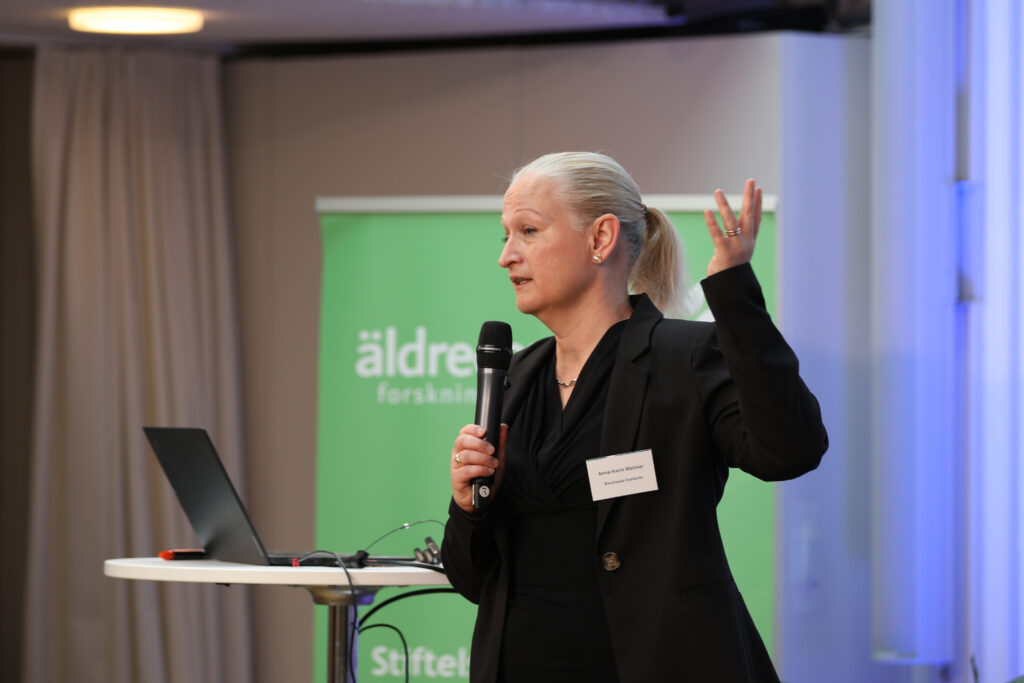
As part of the 40th anniversary celebration, Vice PI Anna-Karin Welmer presented “Att fånga risk i tid – förebyggande insatser och fallprevention hos äldre” (“Capturing Risk Early – Preventive Interventions and Fall Prevention in Older Adults”).
The presentation highlighted two research-based tools, both developed and validated using SNAC-K data, which are currently being implemented and evaluated in clinical practice with the aim to:
- identify older adults at high risk of injurious falls
- monitor health trajectories over time
- enable early and preventive interventions, particularly in primary care
Early and preventive interventions are crucial for reducing the risk of injurious falls and health decline among older adults.
FIF (First-time Injurious Falls) is a simple screening tool that identifies older individuals at high risk of injurious falls and supports targeted preventive interventions, especially in primary care settings.
HAT (Health Assessment Tool) is a composite health measure based on four indicators: basic and instrumental activities of daily living (ADL/IADL), gait speed, chronic diseases, and cognitive function. HAT can identify the risk of adverse outcomes (such as morbidity, mortality, and functional decline) and is used to monitor health over time as well as to support clinical health discussions.
Together, these tools contribute to more person-centered, proactive, and preventive care for older adults.